Black Friday email marketing isn't about sending the biggest discount to the most people. It's about having a plan that gets the right people buying at the right time.
And if your entire Black Friday strategy currently consists of "send an email on Friday announcing the sale", we've got some work to do. 😂
For Shopify brands, Black Friday and Cyber Monday (BFCM) can be a brilliant opportunity to bring in new customers, reward existing ones and generate a healthy chunk of revenue before Christmas.
But the brands that get the most from it aren't necessarily the ones offering the biggest discounts.
They're the ones who've thought about their customers, planned their emails and made sure Klaviyo is ready BEFORE the sales start.
Here's how I'd approach your Black Friday email marketing strategy, from deciding your offer to planning your campaigns and getting your automated emails ready.
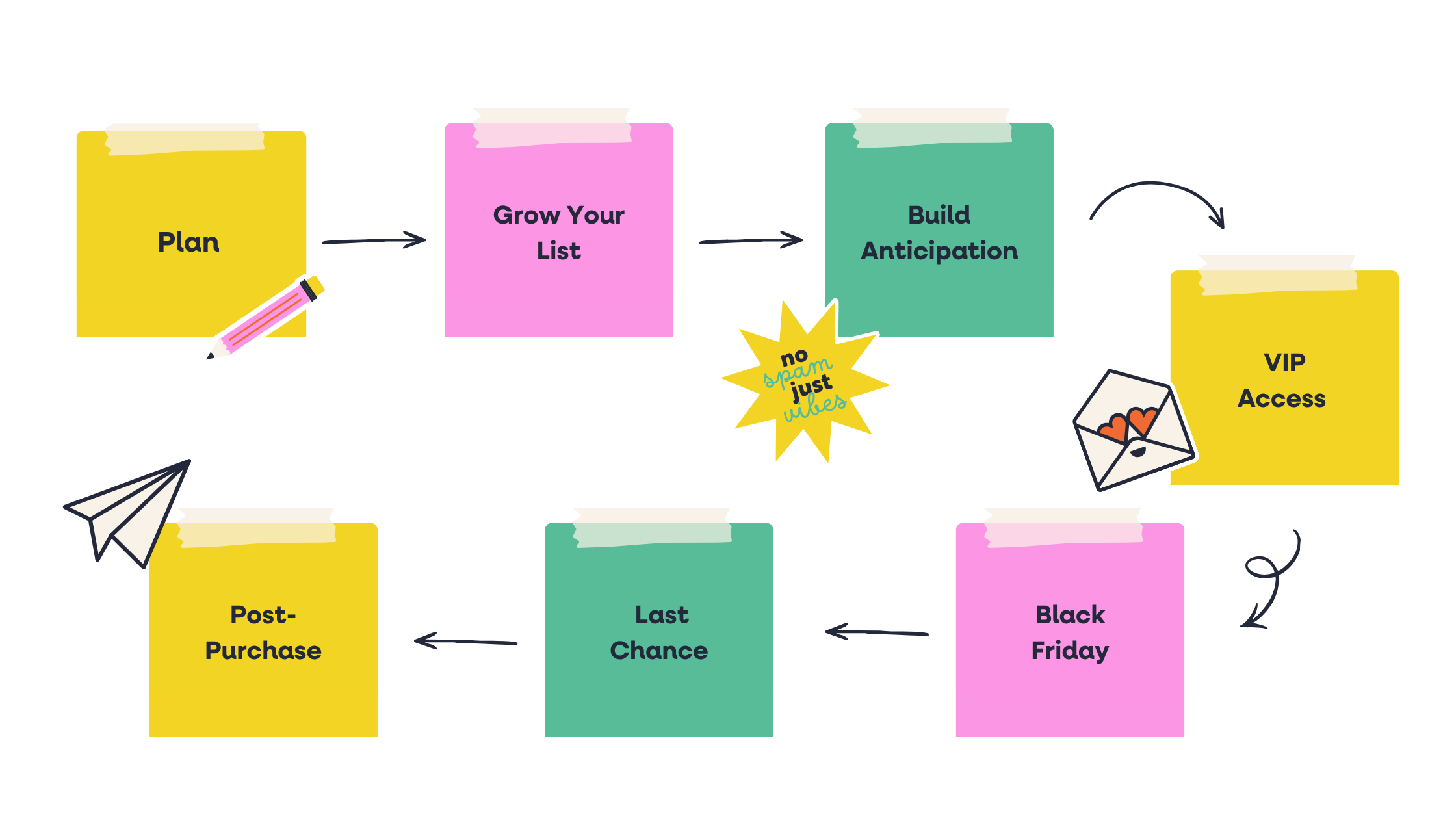
When should you start planning Black Friday email marketing?
Ideally, I'd start planning in September or early October.
That gives you time to decide your offer, grow your email list, prepare your customer segments and build your campaigns without doing everything in a mad panic the week before.
For 2026, the key dates are:
Black Friday: Friday 27 November 2026
Small Business Saturday: Saturday 28 November 2026
Cyber Monday: Monday 30 November 2026
But that doesn't mean your email marketing should only happen across those four days.
There's plenty you can do in the weeks leading up to Black Friday to get customers ready to buy.
And if you're reading this in November? Don't panic. Focus on the essentials rather than trying to do absolutely everything.
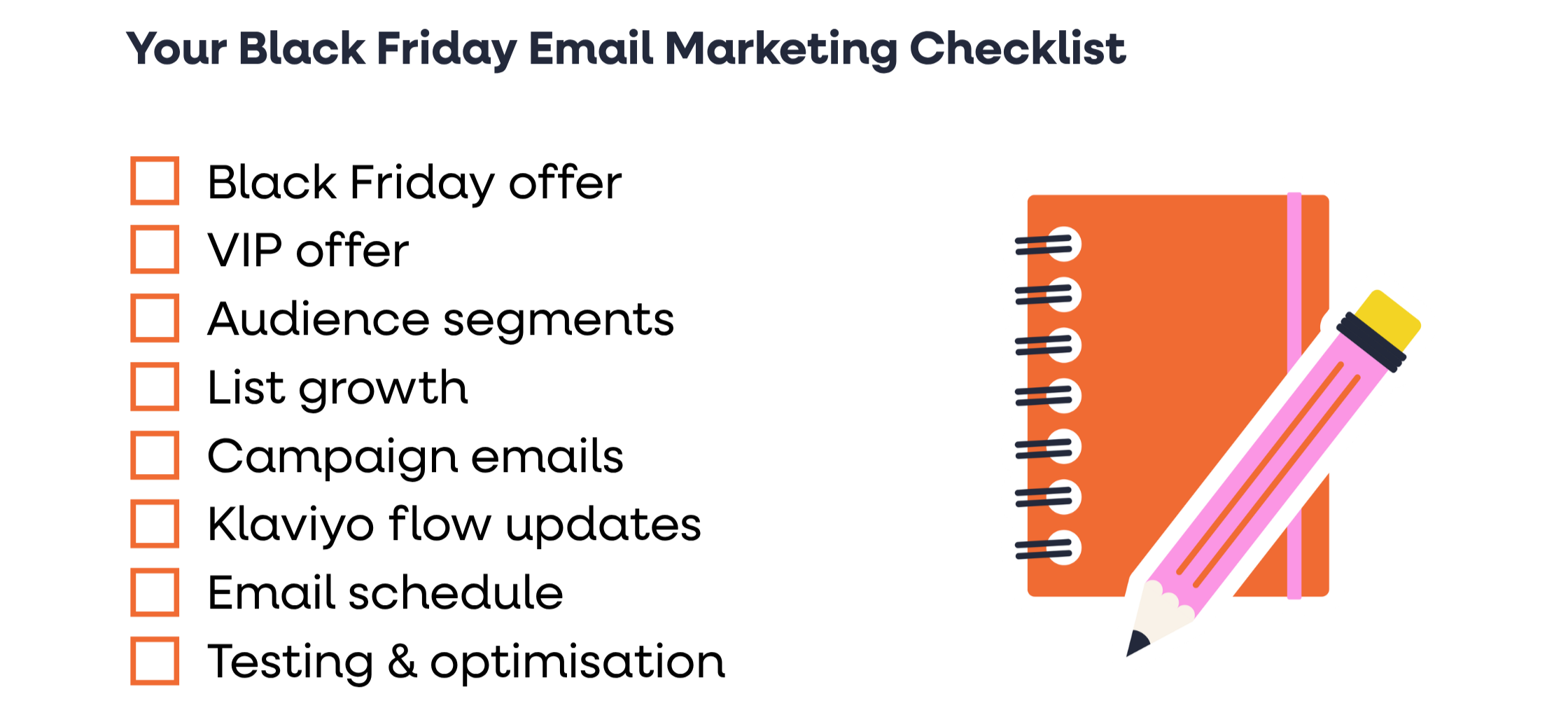
1. Decide on your Black Friday offer (and check your margins)
Before you write a single email, you need to know what you're actually offering.
And no, that doesn't automatically mean 20% off everything.
There are plenty of ways to make Black Friday appealing without slashing prices across your entire website.
You could offer:
Percentage discount: 15% off selected collections.
Spend and save: Spend £75, save £10. Spend £150, save £25.
Bundles: Buy a curated set of products together for a better price.
Free gift: A complimentary product when customers spend over a certain amount.
Free delivery: Particularly effective if shipping costs are a common objection.
Exclusive products: Limited-edition colours, seasonal bundles or products only available during the promotion.
The important thing is choosing an offer that makes sense for YOUR business.
A skincare brand selling repeat-purchase products will have different opportunities from a jewellery brand selling higher-value gifts.
My recommendation: Before you commit to an offer, look at your margins, average order value and what customers typically buy together.
Your goal isn't just to generate orders. It's to generate profitable orders.
2. Segment your customers before you start sending
One of the biggest mistakes I see brands make with Black Friday emails?
Sending exactly the same message to everyone.
Your existing customers already know your brand. They've bought from you. They might even have favourite products.
Someone who's just joined your email list doesn't have that relationship yet.
So why would you speak to them in exactly the same way?
I'd start with three key audiences.
Your VIP customers
These are your most valuable customers, whether that's based on repeat purchases, lifetime spend or another measure that makes sense for your brand.
Give them a reason to feel appreciated.
That could be early access, first choice of limited stock or an exclusive offer.
Your existing customers
These people have purchased before, so you can use their order history to make your Black Friday emails more relevant.
Think complementary products, new arrivals or categories they've already shown an interest in.
Your subscribers who haven't purchased
These people might need more convincing.
Use customer reviews, bestsellers, product education and buying guides to help them decide what to buy.
My recommendation: You don't need 27 different segments. Start with a few meaningful groups and make sure each one receives relevant messaging.
And make sure your recent purchasers aren't receiving emails encouraging them to buy something they've literally just ordered.
3. Grow your email list BEFORE Black Friday
If you want more people shopping your Black Friday sale, you need people to tell about it.
Which is why November isn't the ideal time to suddenly realise you haven't done anything to grow your email list all year.
The weeks leading up to Black Friday are a great opportunity to get new subscribers interested in your brand.
A few ideas:
Create a dedicated Black Friday waitlist.
Update your Klaviyo signup forms to promote early access.
Share your waitlist through Instagram, paid ads and your existing marketing channels.
Encourage subscribers to sign up for first access to your offer.
Make sure new subscribers receive a relevant welcome sequence.
My recommendation: I'd focus on the value of joining your list rather than automatically promising an extra discount.
"Be first to shop our Black Friday collection" can be a compelling reason to sign up, particularly if you have limited stock or exclusive products.
And remember, subscribers need to have agreed to receive marketing emails. Joining a waitlist shouldn't mean quietly adding someone to your marketing list without appropriate consent.
4. Plan Your Black Friday Email Campaign
Here's how I like to approach email planning.
Think of your Black Friday strategy as a jar you need to fill.
You start with the ROCKS. Then the PEBBLES. Then the SAND.
Rocks: Your essential Black Friday campaigns
These are the emails that absolutely need to happen.
Your rocks might include:
VIP early access announcement.
Black Friday sale launch.
A reminder that the offer is live.
Final-chance email before the sale ends.
Cyber Monday campaign, if relevant.
Get these planned first.
If nothing else happens, these are the emails you want ready to go.
Pebbles: Emails that help customers decide what to buy
Once your rocks are in place, add the emails that make your campaign more effective.
Think:
Your bestselling products.
Gift guides for different budgets.
Customer favourites and reviews.
Product comparisons.
Shopping guides.
Frequently asked questions.
These emails give customers more reasons to click, explore and buy.
They're particularly useful for subscribers who haven't purchased from you before.
Sand: The extra opportunities
These are the smaller, more reactive emails you can add once everything else is covered.
For example:
A genuine low-stock update.
A reminder about an approaching delivery deadline.
A product that's unexpectedly selling quickly.
A spotlight on a particular collection.
A final reminder for a specific customer segment.
My recommendation: Don't start with the sand.
Get your essential campaigns ready first, then build out the rest based on the time and resources you have available.
5. Don't make every Black Friday email about the discount
One of the biggest misconceptions about Black Friday email marketing is that every email needs to shout about the sale.
It doesn't.
In fact, I'd encourage you to think about the different types of content your subscribers need.
Curriculum emails
Teach your customers something useful.
A skincare brand could share a guide to building a winter skincare routine.
A homeware brand could show customers how to style their Christmas table.
You're helping people understand what they need and which products are right for them.
Coaching emails
Help customers overcome the things stopping them from buying.
Think sizing guides, product comparisons, FAQs and advice on choosing the right product.
Community emails
Build a relationship with the people on your list.
Share customer stories, behind-the-scenes content, reviews or what makes your brand different.
Buy My Stuff emails
And yes, sometimes you just need to sell.
Your sale announcements, product launches, bestseller roundups and last-chance reminders all have a place.
The goal is to balance these different types of content rather than sending the same discount message repeatedly.
6. Check your Klaviyo flows before the sale starts
Your Black Friday campaigns might be beautifully planned.
But what happens when someone signs up, browses a product, abandons checkout or makes a purchase?
Your automated Klaviyo flows still matter.
And they need checking BEFORE your sale goes live.
Welcome flow
If someone joins your list during Black Friday, will they receive a welcome discount that conflicts with your sale offer?
Check your incentives, coupon settings and messaging.
Browse abandonment
Make sure customers aren't being shown outdated pricing or encouraged to use an offer that isn't valid during the promotion.
Abandoned cart and checkout
These can be particularly important when shoppers are comparing products and making decisions.
Check your timing, exclusions and dynamic product content.
Post-purchase
Someone who's just bought from your Black Friday sale shouldn't immediately receive an irrelevant email pushing them to make the same purchase again.
Review your post-purchase messaging and timing.
Winback
Consider whether your winback flow should continue as normal or whether certain customers would be better served by your Black Friday campaigns.
My recommendation: Don't just pause every flow for Black Friday.
Review what each one is doing and decide whether it needs adjusting.
And remember to plan when your normal flow messaging and offers will return after the sale.
7. Build anticipation before Black Friday
You don't have to wait until Friday morning to start talking about your offer.
In fact, I'd encourage you not to.
Your customers are going to receive a LOT of emails during Black Friday week.
Giving them a reason to pay attention before the sale starts can help you stand out.
You could:
Tease that something is coming.
Share a preview of the products included.
Encourage subscribers to create a wishlist.
Announce VIP early access.
Share gift guides or product recommendations.
Tell customers exactly when the offer goes live.
The key is to give people a reason to care.
"Something exciting is coming" isn't particularly useful if you say it five times without giving anyone more information.
Be specific about what's coming and why your customers should pay attention.
8. Create your Black Friday email marketing calendar
Once you've decided on your offer, segments and campaign content, get everything into a calendar.
Here's an example of how I'd structure a Black Friday email marketing plan.
| When | What to focus on |
|---|---|
| September–early October | Decide your offer, revenue targets, segmentation and list-growth strategy |
| Mid–late October | Build your waitlist, plan campaigns and review Klaviyo flows |
| Early November | Create emails, test signup forms and prepare campaign assets |
| Week before Black Friday | Build anticipation, share previews and launch VIP early access if planned |
| Black Friday weekend | Send sale announcements, product-focused emails and relevant reminders |
| Cyber Monday | Promote your final offer or genuine last chance |
| Early December | Return flows to normal, review performance and follow up with new customers |
This is an example, not a rulebook.
If your sale runs for two weeks, you'll need a different schedule from a brand running a 48-hour promotion.
The important thing is knowing what you're sending, who it's going to and what you want that email to achieve.
9. Test everything before you press send
Please don't spend weeks planning Black Friday only to discover your discount code doesn't work.
Before your campaigns go live, check:
All email links and buttons.
Discount codes and exclusions.
Product prices and landing pages.
Mobile email design.
Campaign segments and exclusions.
Signup forms and waitlist automations.
Flow triggers and filters.
Delivery and returns messaging.
Stock availability.
Email authentication and deliverability.
I'd also make sure you're sending to engaged subscribers rather than suddenly emailing everyone who's ever joined your list.
Black Friday is not the time to resurrect thousands of unengaged contacts and hope for the best.
10. Measure more than just Black Friday revenue
Once the sale is over, it's tempting to look at your total revenue and call it a day.
But there's so much more you can learn.
I'd review:
Revenue generated from Klaviyo campaigns and flows.
Which customer segments purchased.
Click rates and placed-order rates.
Average order value.
Which products and collections performed best.
Unsubscribe rates and spam complaints.
How many new customers you acquired.
How many existing customers purchased again.
And remember, Klaviyo's attributed revenue is useful for understanding email performance, but it isn't necessarily all incremental revenue created by email.
Use your Shopify sales data alongside Klaviyo to get a clearer picture.
Then take those learnings into your Christmas email marketing and next year's Black Friday planning.
Your Black Friday strategy is bigger than your discount
If there's one thing I want you to take away from this, it's that a successful Black Friday email marketing strategy isn't just a series of discount announcements.
It's about understanding your customers and giving them the right messages at the right moments.
Plan your essential campaigns.
Make sure your Klaviyo flows are ready.
Give customers useful reasons to shop.
And don't leave everything until the Thursday night before Black Friday. Please. 😂
Need a hand getting your Klaviyo email marketing sorted?
We help Shopify brands plan, build and optimise their email marketing so they're not relying on last-minute campaigns to generate sales.