How to create a brand newsletter for your Shopify store
If the only time your customers hear from you is when you have a new product, a promotion or something you want them to buy… they’re going to notice.
And it makes email marketing really difficult.
Because every week you’re sitting there thinking: “What can we sell this week?”
Instead, I want you to create one email format you can come back to again and again.
A Newsletter (with a capital N!).
Not a corporate “Here’s what happened at HQ this month” situation that literally nobody asked for.
But a genuinely good email that your customers start to recognise, expect and (ideally) be desperate to open.
This will give you a reason to show up when you’re not asking them to buy something.
And ironically, that can make it a whole lot easier to sell to them when you do.
What is a brand newsletter?
A brand newsletter is a recurring email with a recognisable format that gives subscribers something useful, interesting or entertaining, rather than only promoting products. It also occurs on a predictable schedule, like every Friday or the last Saturday of the month, etc.
For Shopify brands, a newsletter can help you stay at the top of the inbox between orders, build a stronger relationship with your subscribers and give you a consistent reason to email your list.
Or, in less marketing-y language:
It gives you something to email about when you don’t have something to flog.
And that's important because not everyone on your email list is ready to buy something today.
Someone can like your brand, enjoy your emails and want to hear from you without currently needing another candle / dress / toy / pair of earrings / [insert your product here].
Your job is to stay interesting enough that when they are ready, they think of you.
What makes a good brand newsletter?
The best brand newsletters have one thing in common:
They're repeatable.
If sending your Newsletter requires you to invent an entirely new concept every Thursday afternoon, I can tell you exactly what will happen.
You'll do it three times.
Then you'll get busy.
Then you'll suddenly realise you haven't sent one in 3 months.
So instead of starting from scratch every time, create a simple structure you can reuse.
Your newsletter could be:
Founder Notes
Friday Favourites
The Weekend Edit
3 Good Things
Behind the Brand
Monthly Round-up
The format matters less than finding something that fits your brand, gives your customers something worth opening and is easy enough for you to produce consistently.
Bonus points for giving it a memorable name!
You want your customers to recognise it when it lands in their inbox.
And you want you to know exactly what you're creating every time it comes around.
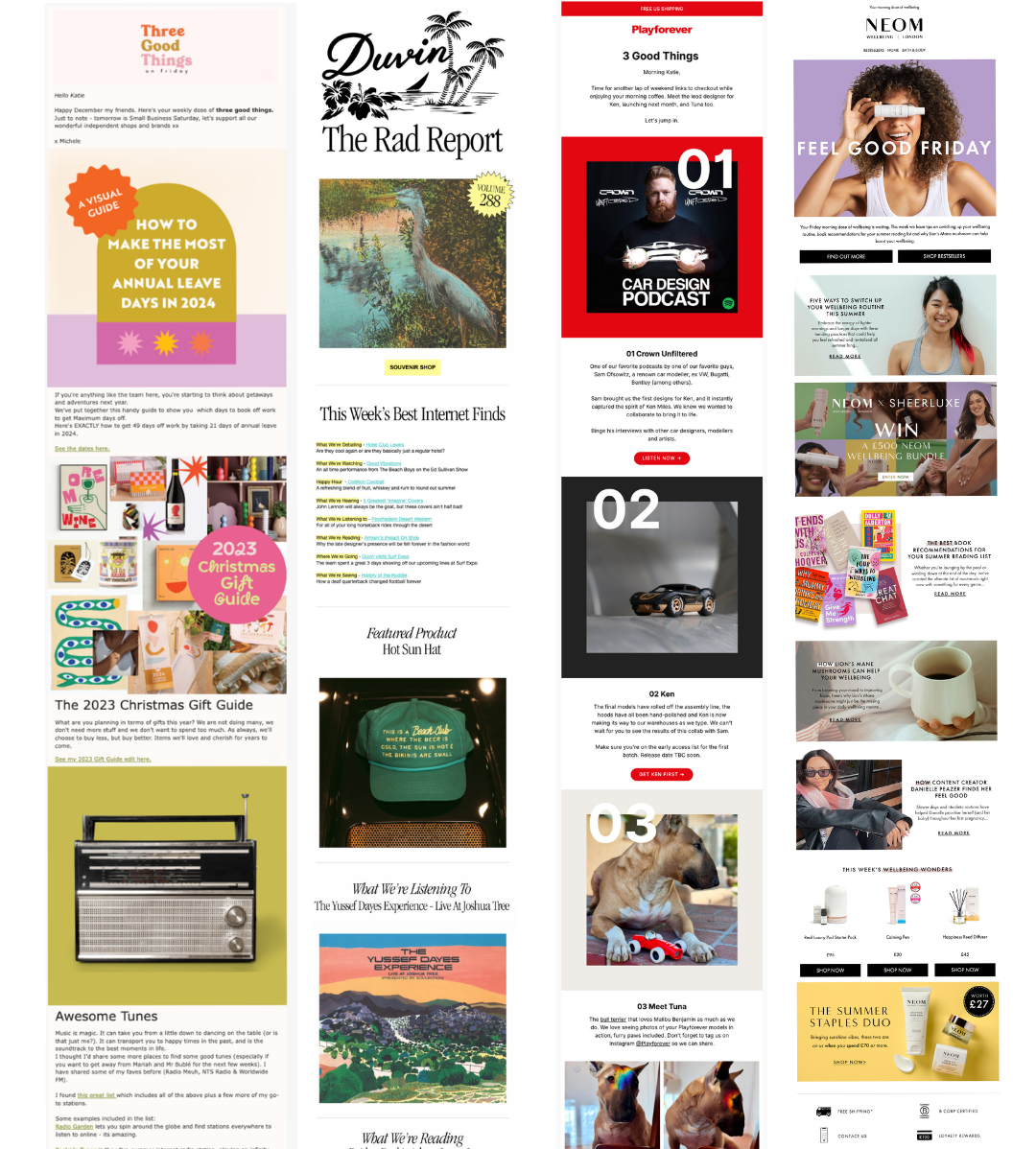
A few recurring newsletter formats we love. The design and content changes from brand to brand, but the important bit is having a format you can come back to again and again.
What should a Shopify brand include in a newsletter?
Your newsletter doesn't need to be entirely about your products.
Actually, I'd rather it wasn't.
Think about the things your ideal customer would genuinely be interested in reading, watching, learning or discovering.
That could include:
something you've watched, read or listened to
something useful you've discovered
a behind-the-scenes moment
advice that makes your customer's life easier
an interesting article
a customer story
something the founder is loving
a recipe, place or recommendation
something happening in your industry
a new product or something you want to sell
And yes, you can still sell something.
The point isn't to suddenly stop talking about your products.
It's to stop making every single email entirely dependent on someone wanting to buy something from you that day.
H2: Try the '3 Good Things' newsletter format
If you don't know where to start, 3 Good Things is one of my favourite newsletter formats for Shopify brands.
It's ridiculously simple.
Every edition contains three things worth sharing.
They don't all have to be about your business. In fact, that's what makes the format work.
For example, if you sell children's products:
01. A rainy-day activity you've tried
02. A brilliant family day out
03. Your new travel activity kit
If you're a fashion brand:
01. Something the founder is loving this month
02. A useful styling tip
03. One product from your current collection
If you sell homewares:
01. A beautiful home you've bookmarked
02. A ridiculously good recipe
03. Something new in the shop
See what we're doing?
We're creating an email someone might enjoy even if they aren't ready to buy today.
One of the three things can naturally lead back to your product or brand, without making the whole email feel like one big sales pitch.
H3: Brand newsletter example: Playforever's 3 Good Things
For Playforever, we created a recurring 3 Good Things newsletter that gives us three interesting things to talk about in each edition.
Instead of starting campaign planning with “What are we selling this week?”, we have a recognisable format that can include interesting stories, recommendations and content alongside Playforever products.
The structure stays the same. The three things change.
That makes the newsletter recognisable for subscribers and much easier to plan consistently.
[KEEP PLAYFOREVER 3 GOOD THINGS SCREENSHOT HERE]
H2: Why do newsletters work for e-commerce brands?
Promotional emails are there to generate sales.
Your newsletter has a slightly different job.
It keeps the relationship going between purchases.
That's especially important for brands selling products people don't need to buy every week.
Your customer might love what you sell and still not be ready for another purchase for three months.
You don't need to disappear until then.
And you don't need to spend those three months shouting BUY SOMETHING at them either.
A good newsletter gives you a middle ground.
You can entertain them. Teach them something. Introduce them to the people behind the brand. Help them get more from something they've already bought.
You stay familiar.
So when they are ready to shop again, you haven't become that random brand lurking somewhere at the bottom of their inbox.
H2: How often should a Shopify brand send a newsletter?
There isn't one perfect newsletter frequency for every Shopify brand.
Weekly is great if you have enough genuinely useful content to maintain it. Fortnightly or monthly can work too.
The important bit is choosing a frequency you can actually stick to.
I'd much rather you send a brilliant Newsletter every fortnight than announce a ✨weekly newsletter✨, send three of them and quietly pretend the whole thing never happened.
Consistency beats ambition here.
And remember: your Newsletter doesn't need to be your only email campaign.
It can become one recurring part of your wider email marketing calendar alongside product launches, educational emails, seasonal campaigns and sales emails.
H2: How do you come up with newsletter ideas consistently?
Don't try to come up with your newsletter content when it's time to write the newsletter.
Start an ideas bank instead.
Open whichever tool you already use: Notes, Notion, Google Docs, Trello, ClickUp, whatever.
Create somewhere called:
NEWSLETTER IDEAS
Then every time you see something and think “ooh, our customers would like that”, chuck it in.
Article you loved? In.
Customer question you keep getting? In.
Funny thing that happened at work? In.
Great product pairing? In.
Interesting TikTok? In.
Customer review that sparks an idea? In.
Something you found yourself explaining three times this week? Definitely in.
Then when it's time to plan your next email, you're choosing from ideas instead of staring at a blank screen trying to invent them.
Much easier.
H2: How to start a newsletter for your Shopify brand
You do not need a 17-page newsletter strategy before you start.
Here's what I'd do:
H3: 1. Pick one repeatable newsletter format
If you're completely stuck, steal 3 Good Things and start there.
You can always change it later.
H3: 2. Give your newsletter a name
It doesn't need to be ridiculously clever.
Something simple and recognisable is better than spending three weeks trying to come up with a pun.
H3: 3. Choose a realistic frequency
Weekly, fortnightly or monthly.
Choose the one you can actually maintain.
H3: 4. Start your newsletter ideas bank
Get your first 10 ideas into it now.
Don't judge them too much. You're creating somewhere to collect ideas, not writing the finished emails yet.
H3: 5. Put your first three newsletters in the calendar
Don't wait until you “have something to say.”
Choose the dates now.
And there you go.
You've got a format, a name, an ideas bank and your first three sends planned.
H2: Your brand newsletter action plan
If you do nothing else after reading this, do these four things:
→ Pick your Newsletter format
→ Give it a name
→ Write down 10 content ideas
→ Schedule your next three sends
That's your Newsletter sorted.
Now go write #1.A recurring newsletter that your customers come to recognise and expect in their inboxes can do more than share updates from the founder. Learn how a consistent, valuable newsletter can strengthen customer relationships, increase email engagement and keep customers coming back.
When it comes to email marketing, many brands focus heavily on product launches, promotions and sales campaigns. These emails have an important role to play, but relying on promotional emails alone can make it difficult to build a lasting relationship with your audience.
The brands with the strongest customer loyalty often have another type of email in their strategy: a regular brand newsletter.
A good newsletter gives customers something worth opening even when they are not ready to buy.
What Makes a Good Brand Newsletter?
The most effective newsletters tend to have a consistent, repeatable format. Instead of reinventing the content every time, brands create a structure that customers recognise and enjoy.
For example, your newsletter could be:
✏️ Founder Notes
✏️ Weekend Edit
✏️ Friday Favourites
✏️ 3 Good Things
✏️ Behind the Brand
✏️ Monthly Round-up
The format itself is less important than finding something that fits your brand, provides genuine value to your audience and is easy to produce consistently.
Over time, the newsletter becomes part of your customers' routine — something they recognise in their inbox rather than another generic marketing email.
Try the "3 Good Things" Newsletter Format
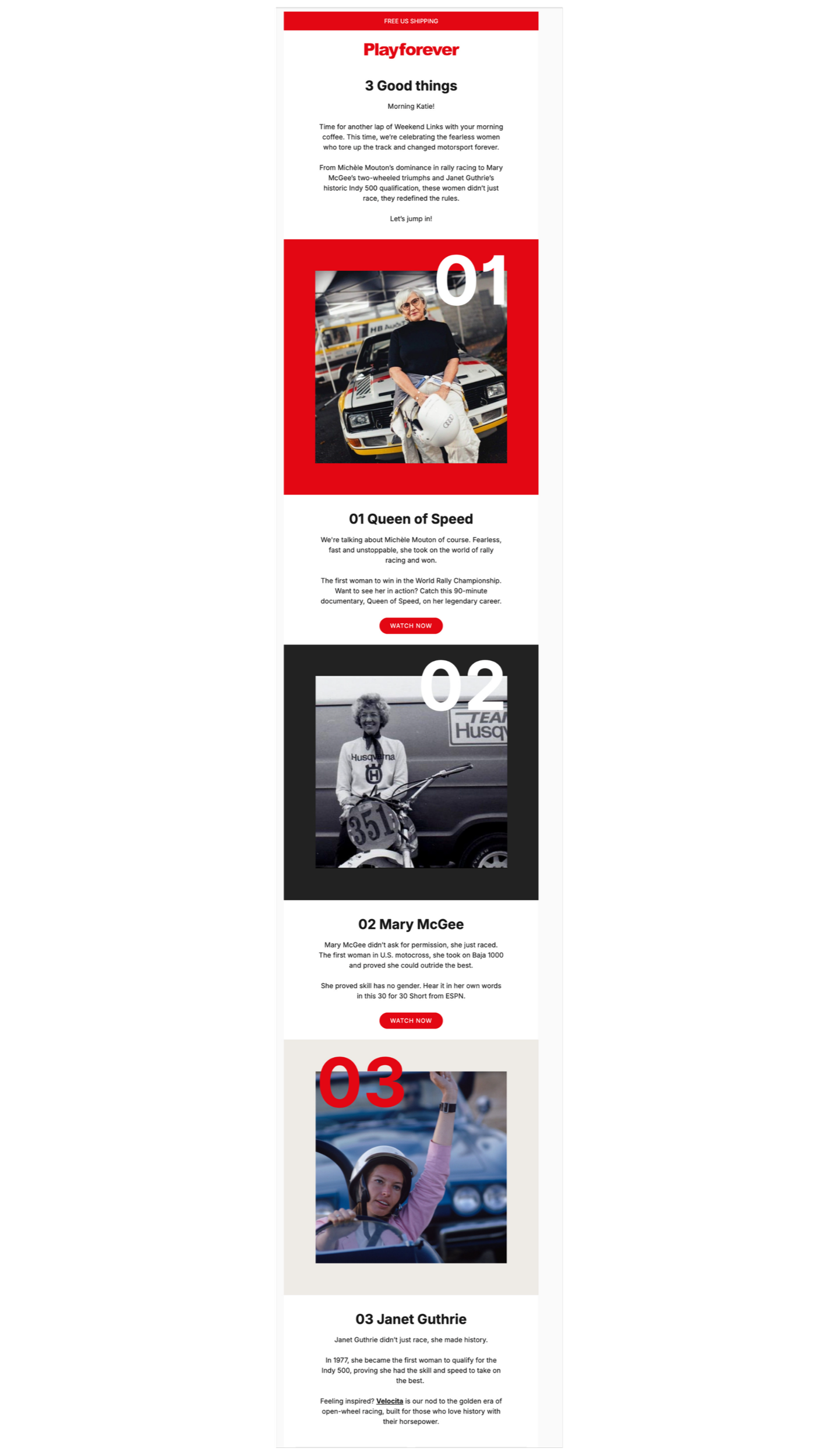
One simple format that works particularly well is 3 Good Things.
The idea is straightforward: share three things your brand, founder or team has genuinely enjoyed, discovered or found useful.
These could include:
✏️ Podcasts
✏️ Books
✏️ Articles
✏️ Recipes
✏️ Documentaries
✏️ Technology or productivity tools
✏️ New products
✏️ Interesting discoveries
Not everything needs to be directly connected to your business. Sharing useful and interesting recommendations can make your newsletter feel more human and valuable.
There is one important rule: one of the three things should naturally lead back to your product or brand.
This allows you to introduce products without making every section feel like a sales pitch.
How to Stay Consistent With Email Marketing
Coming up with newsletter content regularly can be one of the biggest challenges. The easiest solution is to create a running list of ideas.
Use a Notes app, document or private message thread to save anything interesting as you come across it. When it is time to create your next newsletter, you will already have a bank of potential content to work from.
This simple habit can make consistent email marketing much easier.
Newsletters Build Relationships, Not Just Sales
Promotional email campaigns are designed to drive sales. A newsletter serves a different purpose.
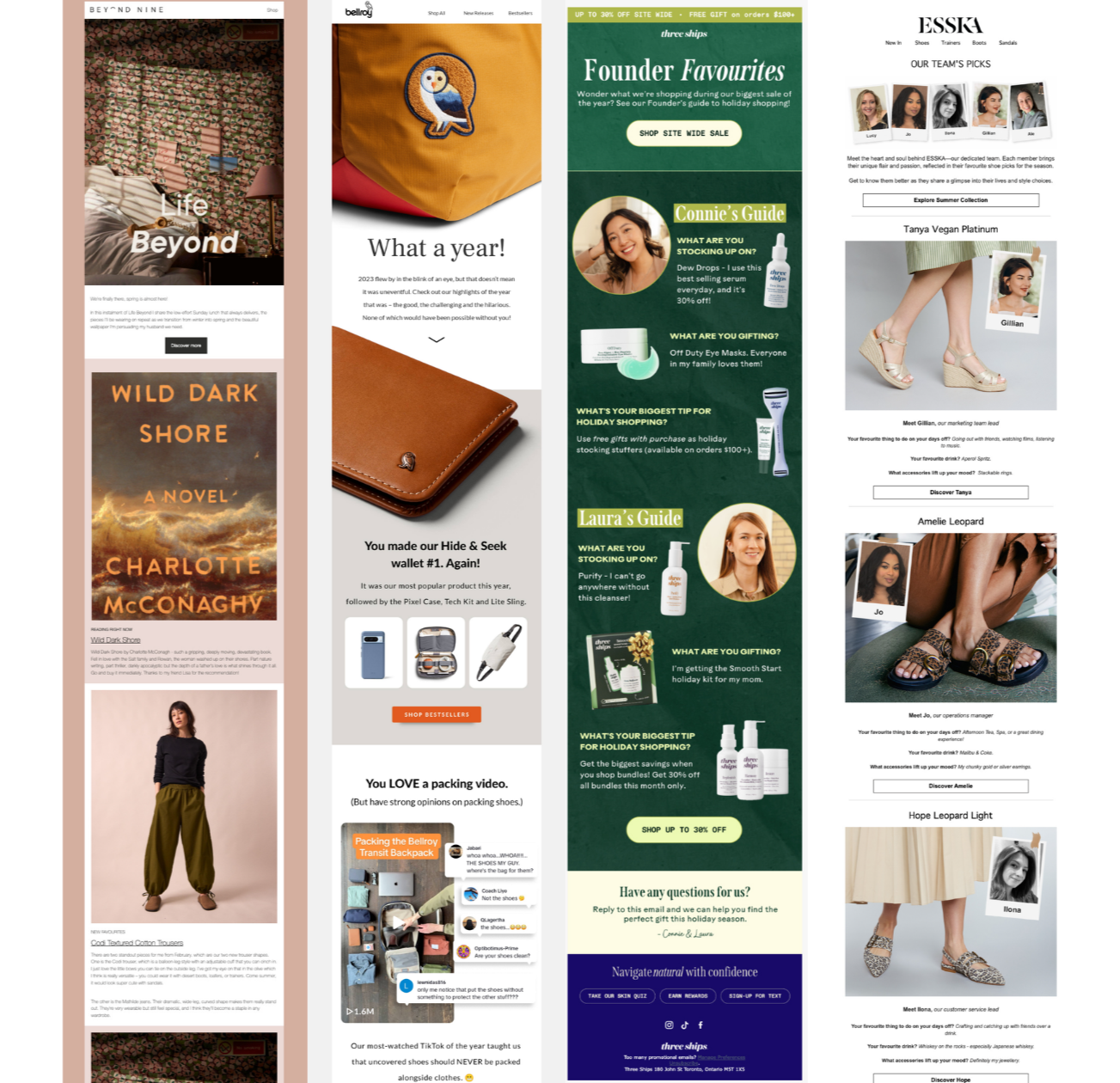
It gives your brand the opportunity to provide value, demonstrate personality, share useful content and stay connected with customers between purchases.
That relationship matters.
When customers regularly receive emails they genuinely enjoy reading, your brand becomes more familiar and memorable — helping create the trust and loyalty that encourages repeat purchases.
The goal isn't simply to send more emails. It's to create an email your customers actually want to receive.
Bonus points for giving your newsletter a memorable name that customers can recognise.